
Artificial intelligence in aquaculture feeding: from data to smart decisions
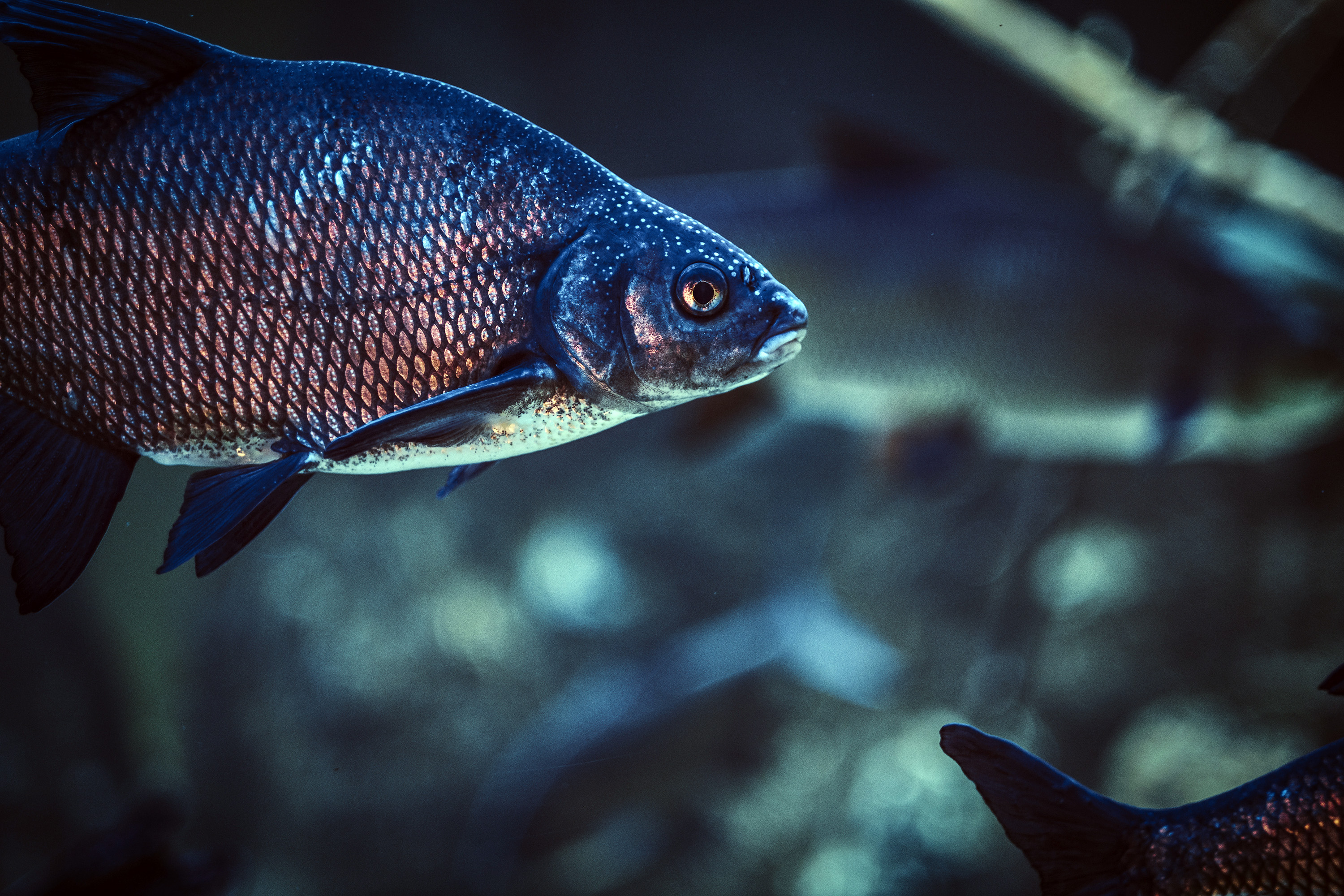
Feeding is at the heart of modern aquaculture. It’s the point where animal welfare, economic sustainability, and environmental efficiency converge. In this context, artificial intelligence (AI) is emerging as a strategic ally capable of transforming how production processes are managed. At Fish Farm Feeder, we have been developing precision feeding technologies for over a decade, and today we are taking a decisive step with the full integration of AI into our new digital ecosystem.
From data to useful knowledge
Over the past few years, advances in sensor technology, edge computing, and real-time processing capabilities have enabled the capture of massive volumes of data in aquaculture farms. However, the value lies not only in the quantity of information but also in its interpretation. AI provides the ability to transform this data into useful and actionable knowledge, allowing producers to make decisions based on predictions, trends, and patterns invisible to the human eye. In other words, AI transforms aquaculture feeding into an intelligent, dynamic, and adaptive process.
A new software that redefines feed management
At Fish Farm Feeder, we believe that artificial intelligence is not a future promise, but a working tool that is already redefining feed management. Our new software represents a paradigm shift from traditional solutions. Designed as a responsive web application, accessible from any device and operating system, it allows producers to manage feed ubiquitously—everywhere, every time—integrating intelligent decisions directly into the feeder workflow.
This new generation of software breaks the limitations of the previous desktop environment and relies on a flexible architecture that is interoperable with the farm’s IoT ecosystem. Thanks to this, the system communicates with sensors, silos, feed lines, and cameras, allowing each component to actively contribute to the decision-making process. Feeding is no longer a programmed action but becomes an intelligent response to the real-time state of the environment and the fish.
Biomass prediction and feed efficiency
One of the cornerstones of this advancement is the incorporation of predictive growth and consumption models. Building on the experience gained from R&D projects focused on the use of AI for aquaculture (AI4F, PREFISHFARM), we have developed a biomass prediction engine capable of dynamically estimating population weight trends and feed conversion ratio (FCR). These models, based on supervised learning, utilize key variables such as water temperature, average size, feeding rate, feed quality, and historical growth data.
Accurate biomass prediction not only optimizes feed quantity but also anticipates production deviations, reducing losses and improving batch uniformity. In this sense, AI acts as a decision support system (DSS) that assists managers in daily and strategic feed planning. Recent research confirms the value of these approaches: neural network algorithms have proven effective in predicting biomass and feed conversion ratio (FCR) in various crop species, improving feed efficiency by up to 15% compared to traditional static models (Saad et al., 2024).
Understanding fish behavior
AI also opens the door to a new dimension: the analysis of fish behavior. The integration of cameras and acoustic sensors allows for the capture of activity patterns, movement speed, and grouping density—indicators that reflect both appetite and animal welfare. The use of computer vision and deep learning techniques in aquaculture is experiencing remarkable growth, with applications ranging from stress detection to the identification of overfeeding phases (Gladju et al., 2022). In our new system, this information could be combined with feeding models to automatically adjust the dosage or recommend changes to the daily strategy, achieving intelligent feedback between fish behavior and feeder control.
Edge Computing: intelligence in the feeder itself
Another key aspect of this new architecture is the use of edge computing algorithms integrated directly into the feeders. Instead of continuously sending all data to the central server, the devices run local filtering and analysis processes that select only the relevant information. This approach reduces data traffic, increases security, and ensures an immediate response even without a stable connection. In practice, the feeder becomes an intelligent node, capable of learning and reacting locally to environmental conditions.
The development of this new generation of software also reflects a cultural shift in how we understand digitalization. Until recently, computerization in aquaculture was limited to recording data and generating reports. Today, producers demand tools that think, learn, and adapt. Our approach is not solely based on displaying graphs or historical data, but on offering operational recommendations that simplify decision-making. AI does not replace the aquaculturist’s experience, but rather amplifies it, combining human intuition with the mathematical rigor of predictive models.
At Fish Farm Feeder, we understand artificial intelligence as a tool for technological empowerment, designed to translate scientific knowledge into daily production practices. Thanks to this approach, we can adapt the solution to both small land-based farming facilities and complex multi-species offshore systems.
Interoperability and platform independence are other distinguishing features of this new software. Based on modern web technologies, the system can run on computers, tablets, or smartphones, without requiring local installation. This means that producers can access data, monitor feeding, or modify parameters from anywhere in the world. Furthermore, the IoT architecture allows for integration with other farm systems, such as oxygen controllers, cameras, weather stations, or predictive maintenance modules.
Sustainable production and blue digitization
In a global context where sustainability is imperative, artificial intelligence offers a unique opportunity to produce more with less. Several studies have demonstrated that AI-based feeding systems can reduce feed waste and minimize the environmental impact of aquaculture (Rather et al., 2024). By optimizing feed conversion and anticipating the actual needs of the fish, AI contributes to improving animal welfare and reducing the carbon footprint of production.
The future of smart aquaculture lies in the convergence of AI, machine vision, robotics, and predictive analytics. In the coming years, the combination of these fields will allow us not only to feed fish, but also to observe, understand, and anticipate their behavior with unprecedented accuracy. At Fish Farm Feeder, we will continue to drive this evolution, consolidating our technological leadership and actively contributing to the digital transformation of aquaculture.
References:
– Aya Saad, Alexia Baikas, Mette Remen, Finn Olav Bjørnson,. (2024). Optimizing Feeding Strategies in Aquaculture Using Machine Learning: Ensuring Sustainable and Economically Viable Fish Farming Practices. Procedia Computer Science, Volume 246, 2024, Pages 4712-4721. DOI:10.1016/j.procs.2024.09.336.
– J. Gladju, Biju Sam Kamalam, A. Kanagaraj. (2022). Applications of data mining and machine learning framework in aquaculture and fisheries: A review. Smart Agricultural Technology, Volume 2, 2022, 100061, DOI: 10.1016/j.atech.2022.100061.
– Mohd Ashraf Rather, Ishtiyaq Ahmad, Azra Shah, Younis Ahmad Hajam, Adnan Amin, Saba Khursheed, Irfan Ahmad, Showkat Rasool. (2024). Exploring opportunities of Artificial Intelligence in aquaculture to meet increasing food demand. Food Chemistry: X, Volume 22, 2024, 101309.
DOI: 10.1016/j.fochx.2024.101309.

Javier Álvarez Osuna is a director of R&D and information technologies at FFF.
His 30 years of professional activity have been developed mainly in the technological field and specifically in R&D. He has been a Torres Quevedo researcher (2009) and his merits include participation in more than 25 R&D projects and management of another 10 as principal investigator.
He is the author of 10 international articles and holder of 2 international technological patents. He is an expert in the development of embedded systems and software for industrial environments that require high performance.
Doctor in Pharmacy – the University of Santiago de Compostela (1997).