
blog

Types of Aquaculture Feed Storage

January 21, 2022
Blog 26.1 Feed Storage Options In Aquaculture

Aquaculture farms cultivate numerous types of fish and shellfish. There are different sizes of pellets that are used, depending on the phase of their growth, regardless of whether they are fed by hand or automatically.

Any type of feed needs to be stored, so depending on the farm management it can be stored in two ways:

Aquaculture Feed Supply. Forms, size, and original packaging

Fish feed manufacturers offer different ways of supplying the pellets, the most common being 20kg bags, big bags and by truck.

Blog 26.3 Varieties Of Feed Storage Aquaculture

20 kg fish pellets bags.

They are very common and practical for aquaculture farms with small production volumes.
The size and weight of the bag allows its easy use by operators, without any need for other tools for transporting it within the fish farm.

Blog 26.4 Aquaculture Feed Storage Methods

Big bags used in aquaculture

They are bags that allow to store bigger volumes of feed, starting by 500 kg and therefore are ideal for intensive farming.
Unlike the bags, it is necessary to use a forklift for its further transportation within the farm.

Blog 26.5 Feed Warehouse Solutions Aquaculture

Trucks used for fish feed transport

Trucks are often used to supply pellets for farms with large finfish production. The storage system is carried out in two steps, with a central storage that supplies the second level of storage in silos of limited capacity, for the consumption of only a few days.

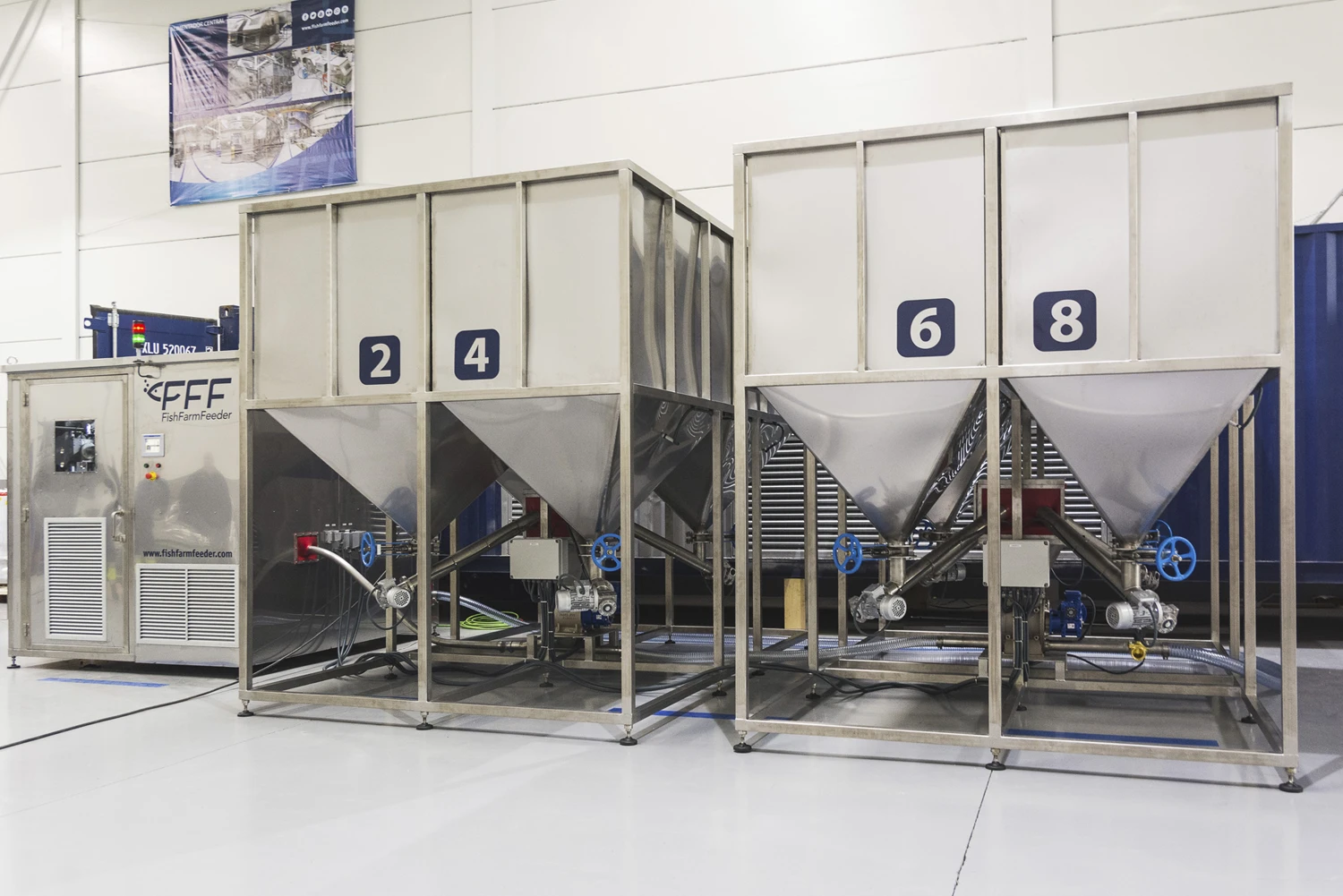
Silos - Feed Storage in Centralized Feeding Systems

In the case of aquaculture farms with centralized feeding systems, the feed is generally stored in silos. This step is necessary, because it helps to store each pellet size separately and deliver it to the tanks with fish or shrimp in the desired doses.

Besides silos, there are also some more economic storage forms that we explain below.

Types of silos used in aquaculture

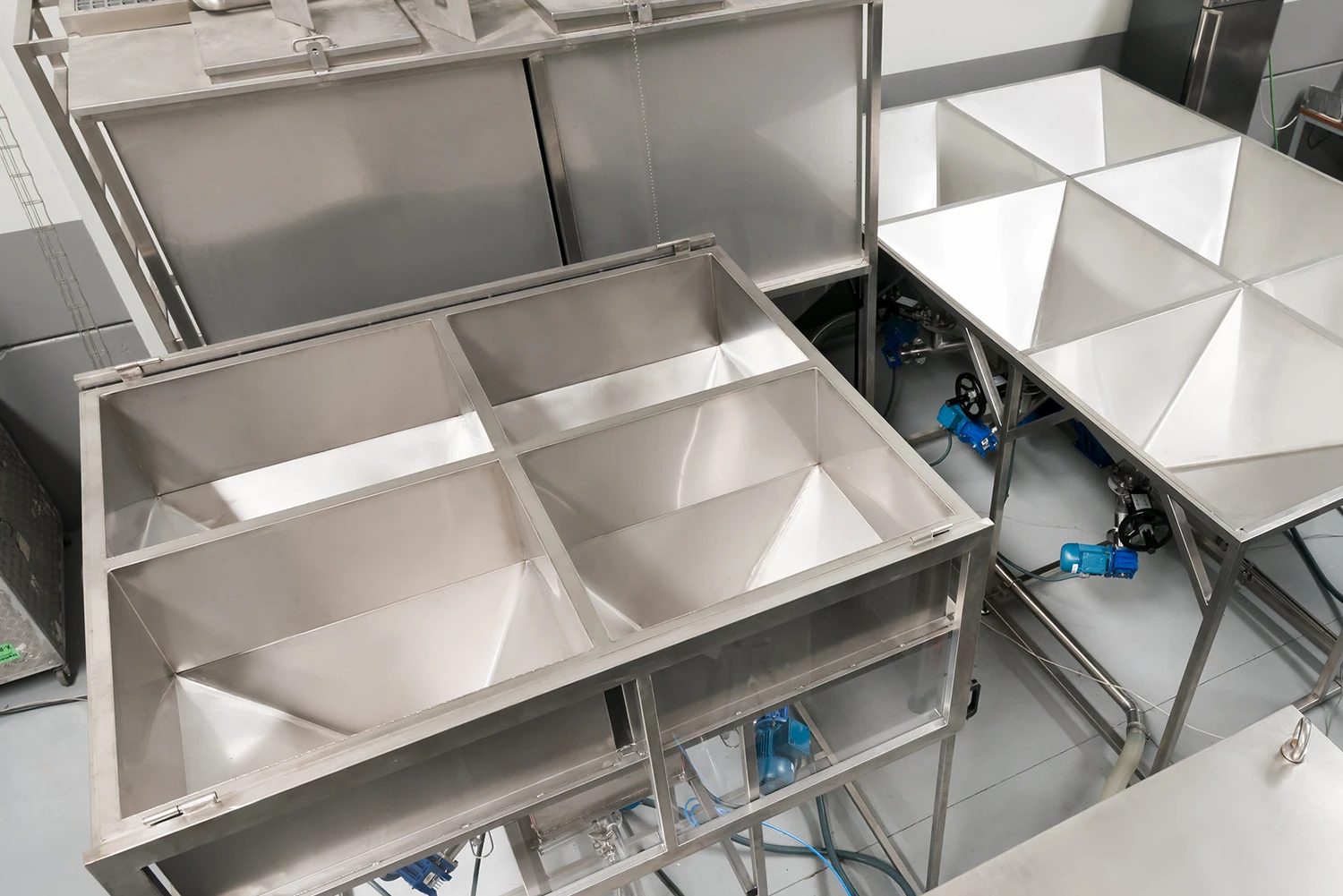
Custom-made silos

This type of silos is manufactured in stainless steel (for salt water) or galvanized treatment (for aquaculture production in fresh water).

The volume of the silo is defined by the fish farm, reflecting the feeding needs.
The main advantages of custom-made silos are:

Standard silos

Blog 26.11 Silo Solutions For Aquaculture Feed

Standardized storage silos are provided by specialized companies that manufacture large capacity silos.

These silos are then integrated with the feeding systems to generate and deliver the desired doses.

The main advantage of standard silos is their price since they are usually cheaper than custom-made silos.

BigBag Charger – Alternative storage system

Blog 26.12 Feed Containers And Silos Aquaculture

In some farms it is possible to apply a solution without the need of silos.

The Big Bag charger, created by Fish Farm Feeder, uses the original packaging supplied by the fish pellet manufacturer and, thanks to its support structure the big bags are connected directly to the centralized feeder. This way the Big Bag charger substitutes a silo.

The main advantages of the Big Bag Charger are:

Storage Accessories used in aquaculture

Silo Loaders

If the pellets are delivered to a fish farm in big bag format, it is necessary to have a system that allows to move the pellets to silos before its distribution to tanks. Silo loaders can be the solution. How does it work?

The bag with pellets is raised with the help of a loader to a height that allows its opening in is bottom part and guide the pellets through a pipe and distribute to the desired silo.

The chargers manufactured by Fish Farm Feeder are customizable – respecting the needs of a farm. It means that they are adapted to the space available at the farm and to the size of bags and quantity of silos that are used at the farm.

Blog 26.13 Feed Silo Technologies For Aquaculture
Blog 26.14 Feed Bin Systems Aquaculture

Smart feeding is the future of aquaculture.

Are you ready to take the next step?

With more than a decade of experience in the industry, Fish Farm Feeder designs advanced feeding systems that combine technology, precision, and sustainability. Take the next step and join the aquaculture of the future.