Which Feed Spreaders are used in Automatic Feeding Systems in Aquaculture?

Spreaders. What they are and when to apply them? In fish farms with automated feeding technology, the system should guarantee two important elements: deliver the feed to a tank or cage and spread it homogeneously over the largest possible surface of water. Just this way it is viable to feed significant number of fish. Distributing the feed over a […]
Sizing and customizing automatic feeding systems for land based aquaculture and sea farms
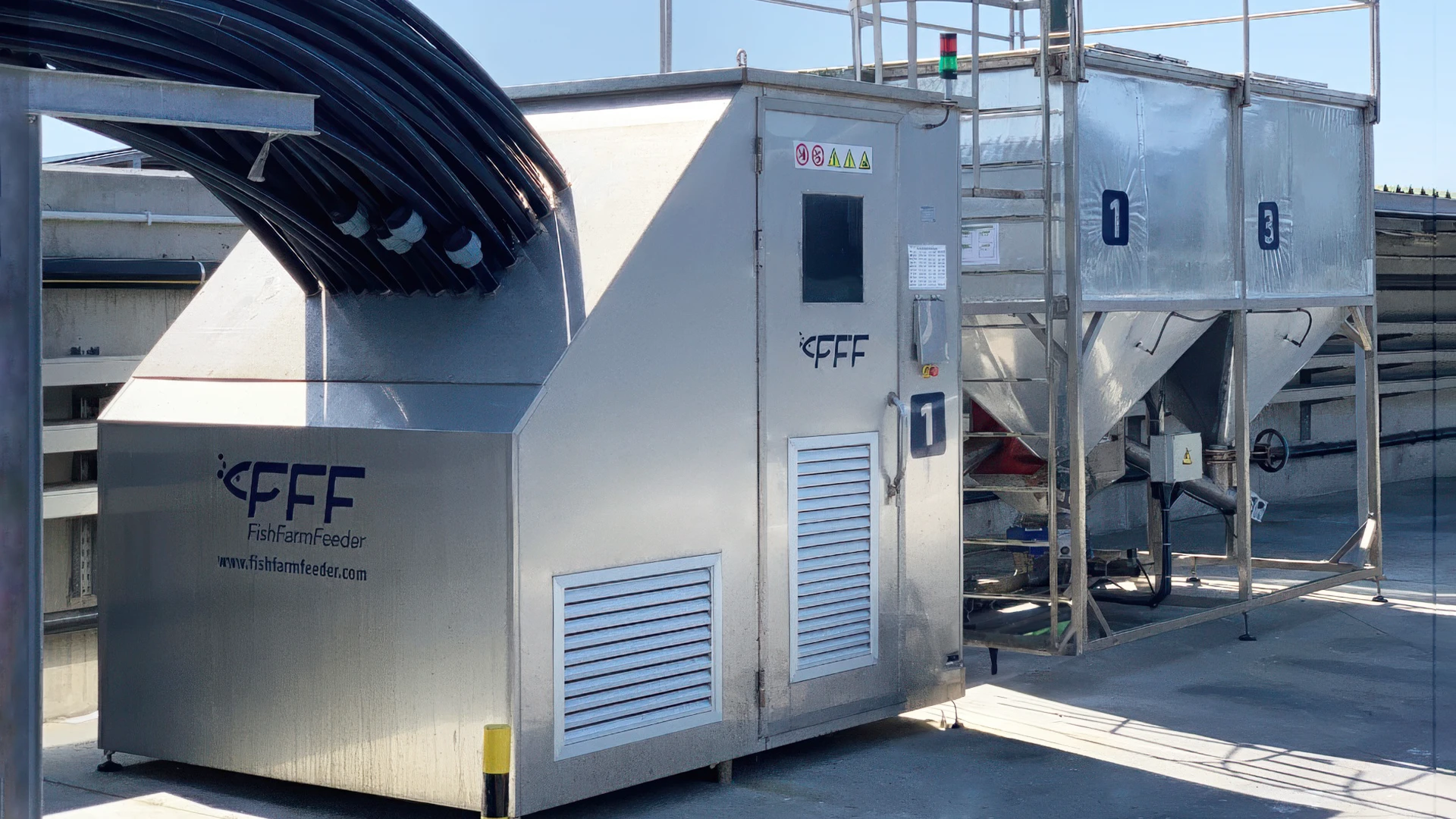
Surely this question has been asked many times: Do I really need a feeding system in my fish farm? Probably the answer to this question is YES, but which Feeding System? As you have probably studied the different options offered by the market, let us focus on our Centralised, Pneumatic, Automatic and Customised Aquaculture Feeding Systems. CENTRALISED: because […]
Why a Feeder? Advantages of using feed automation systems in aquaculture
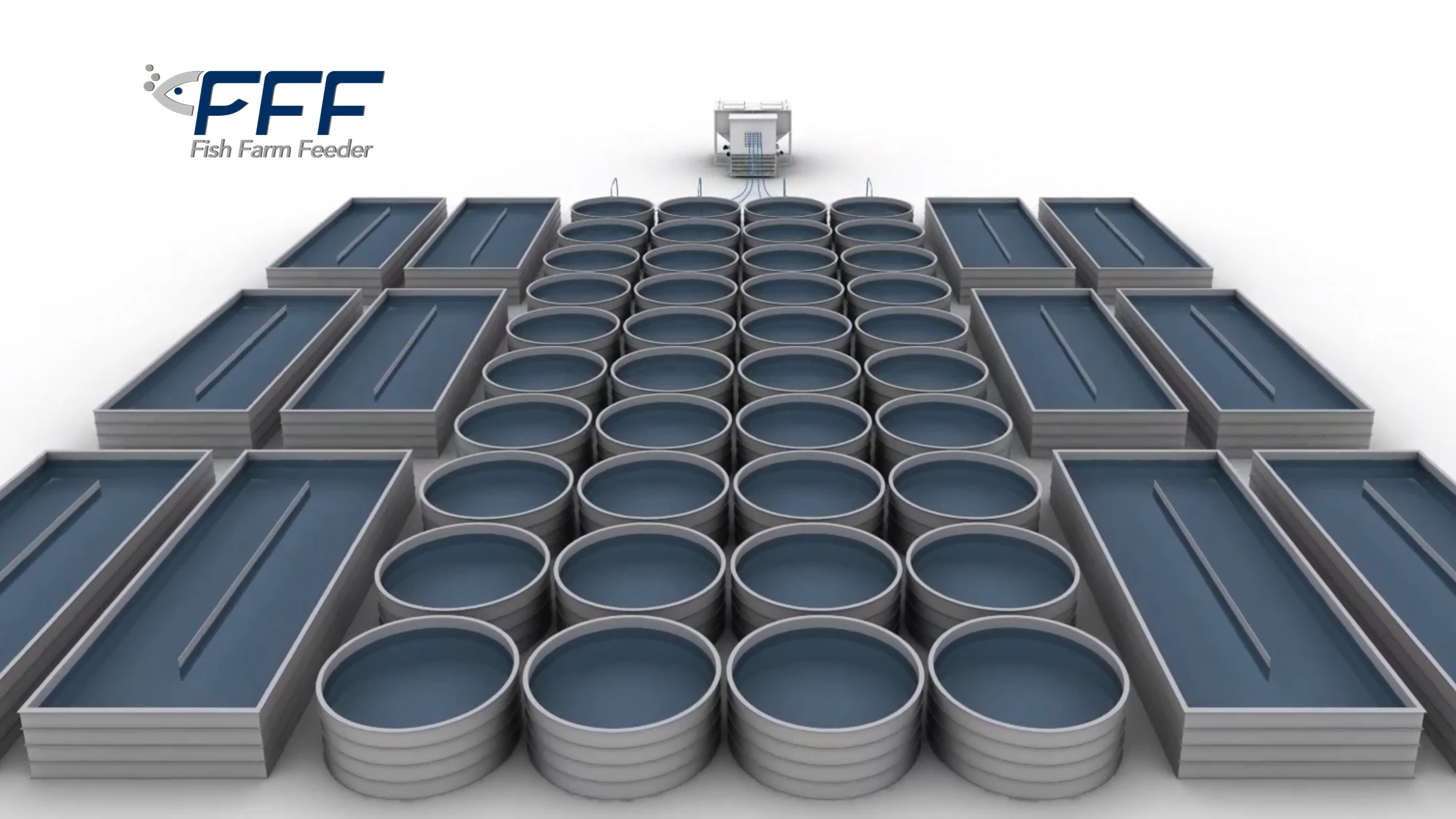
Improved FCR (Fish Conversion Rate). Reduction in size dispersion. Increased growth rates. Reduction of wasted feed. Significant labor savings Low maintenance costs. Programming and total control by software. Monitoring via computer, smartphone, or tablet (App). Integrable software with farm management programs. Sensor integration (dissolved oxygen, temperature, pH, etc.). Feed and batch traceability. Manual versus automated […]
Automatic Feeding System as an Essential Tool to Optimize Intensive Shrimp Farming

RAS shrimp farming has evolved recently towards a better control of the aquaculture conditions, in order to avoid disease incidences, as well as reducing its environmental impact. Optimizing feeding is key in intensive shrimp farming, bringing along obvious benefits: Feeding the shrimp according to their capacity to eat all day/night long will optimize its growth. Harvest […]
Mini Feed Barge for Small and Medium Size Aquaculture Farms in the Sea and Lakes
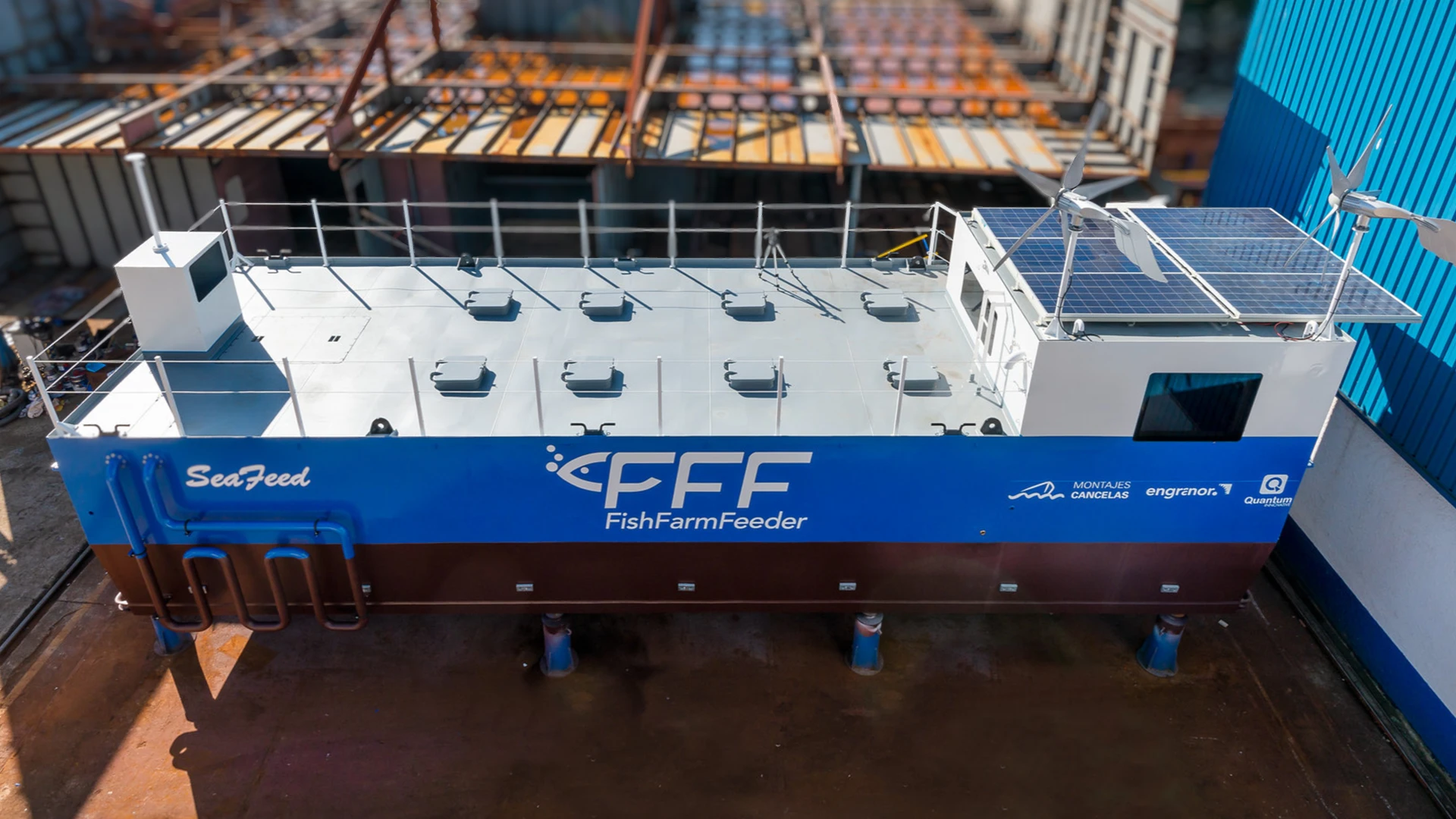
In a market where major manufacturers build feed barges for aquaculture ranging from 96 Tons to 850 Tons, FishFarmFeeder, unique global manufacturer of specialized aquaculture feed systems, has designed and built for the global market this small, automatic, intelligent and autonomous aquaculture feed barge. With this innovative design, we offer small and medium sized fish farms, whether in the […]
Automatic aquaculture feeding system for sole nursery
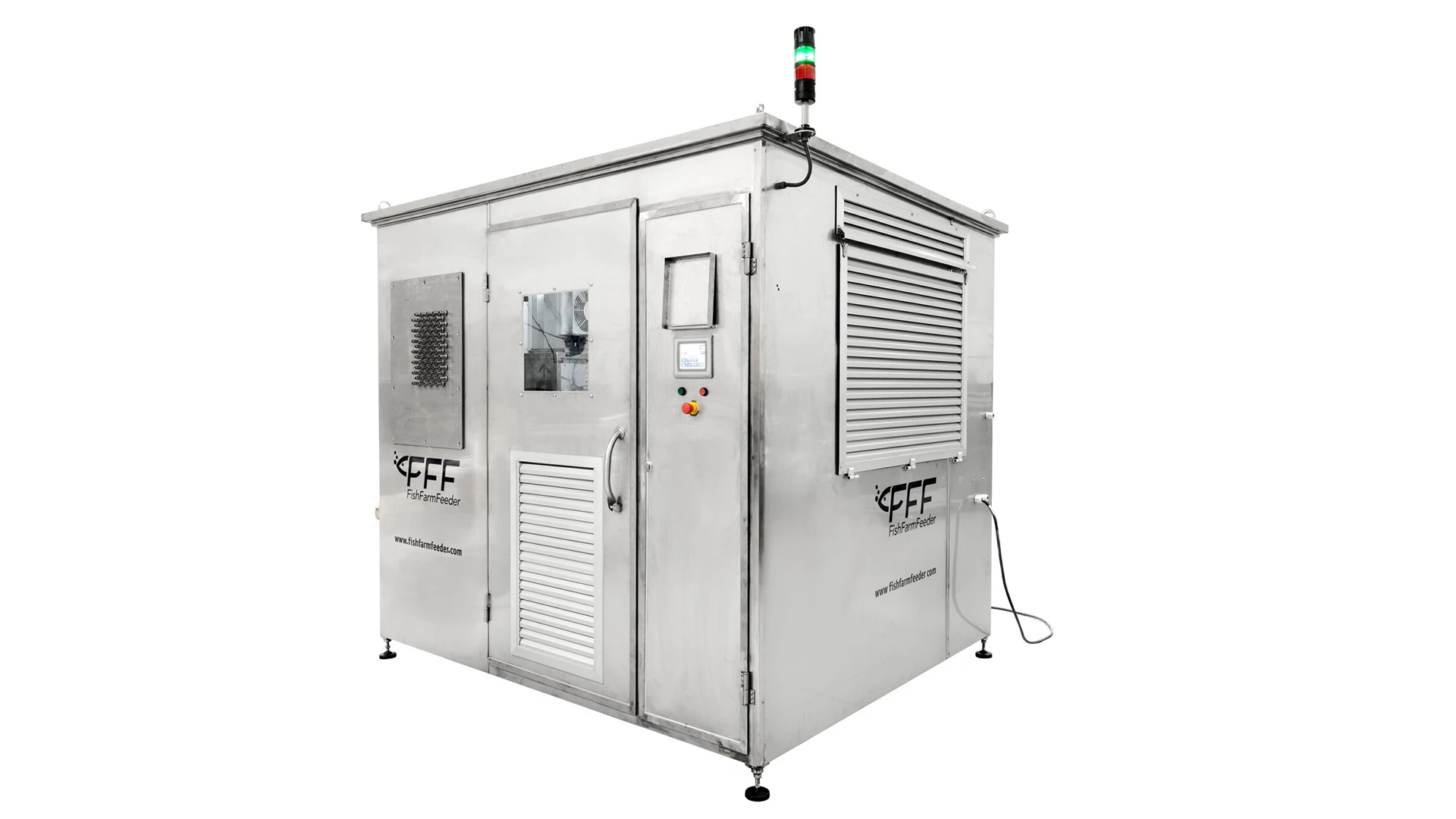
In the Nursery the sole fry has to grow from a size of 1.5-2.0 grams to 5-10 grams. This is a phase in which the feed must normally be distributed to satiety in a high number of intakes. In addition, the size dispersion in the fry is significant. Such conditions require the use of an agile […]
Feeding Systems for Fish Farms and RAS Fish Farming
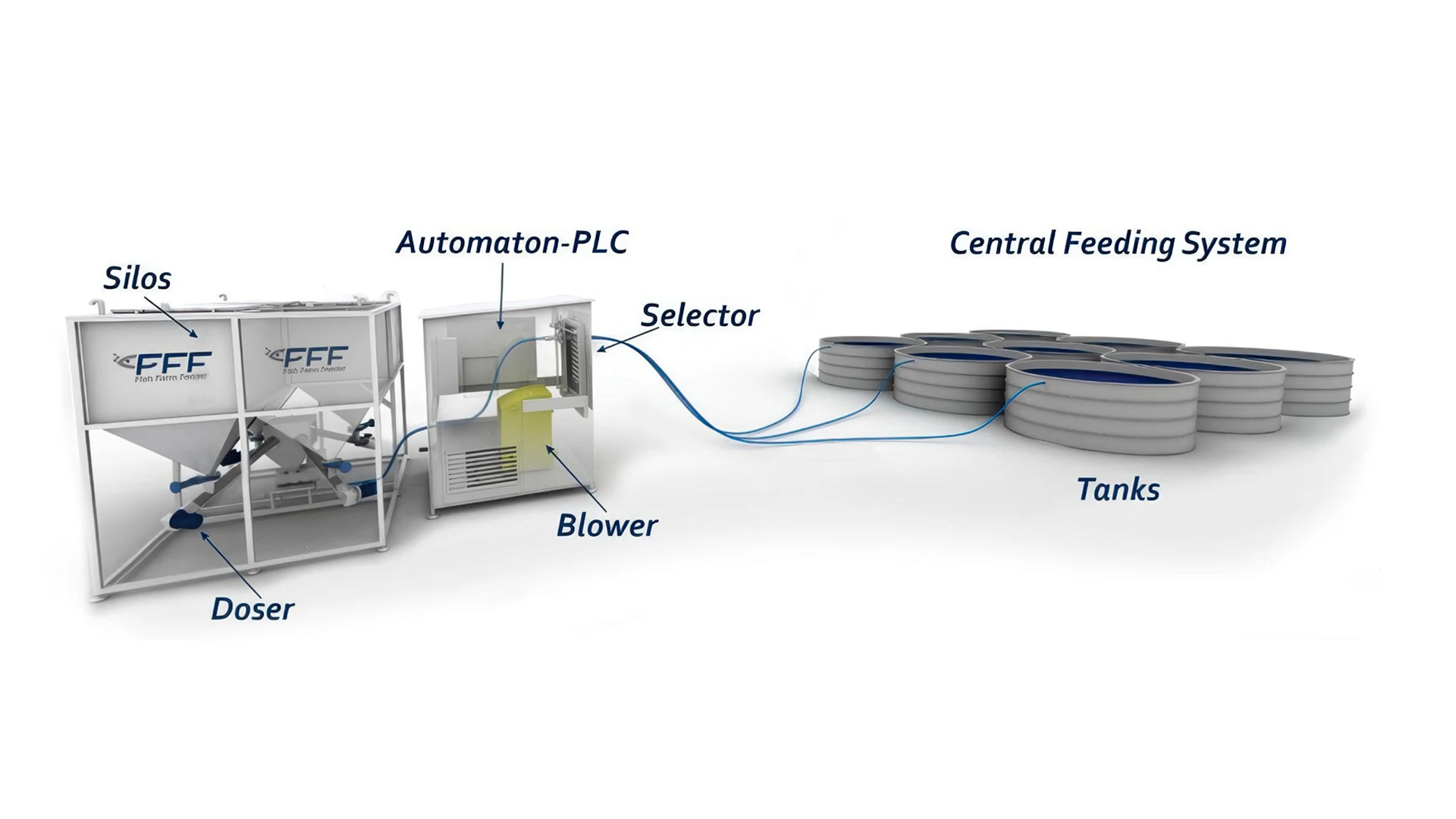
Let’s do a little history. The concept of automatic feeding in aquaculture was born and developed in Norway in the early 1980s. The first equipment was developed in the environment of sea cage feeding and was very basic. This equipment consisted of a hopper with a capacity of less than 200 kg, a blower to send the […]
Larval feeding of dry and live feed centralized and automatic
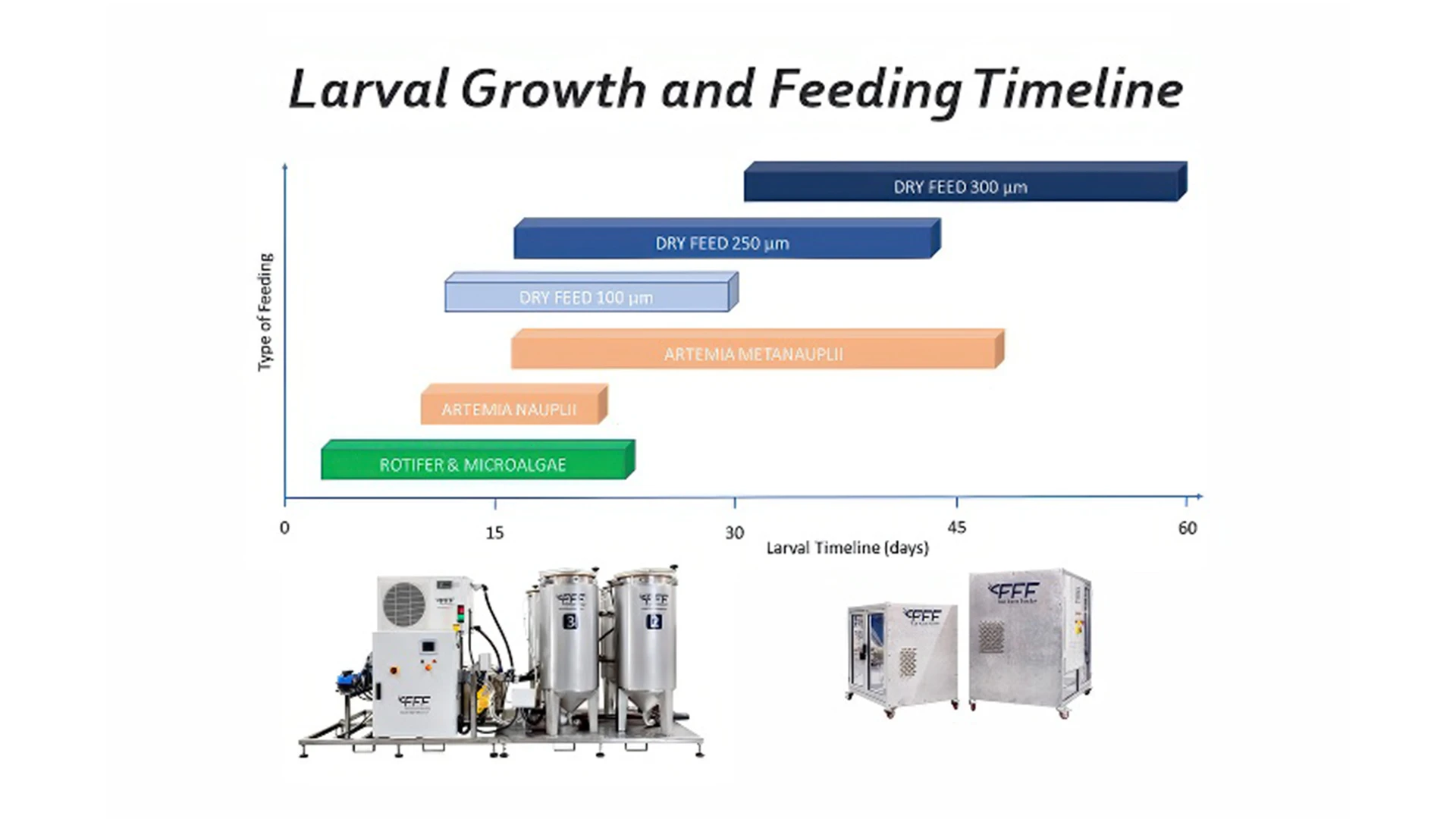
Automatic Central Feeding Systems for Medium and Large Hatcheries Low reproducibility in terms of survival, growth and quality is one of the main issues that all hatcheries have to face. It is assumed that these problems are caused by nutritional and microbiological factors Fish larvae have high growth rates which means that live and dry […]
Successfull Implementation of SAP Business One and Power BI software

At FishFarmFeeder we have just implemented SAP Business One as Management Software to optimize our Sales, Purchasing, Stock Control, Manufacturing, reporting and Integration processes with Office365, which is contributing since its start-up to an improvement in our productivity, allowing us to have information instantly. The multinational Grupo Seidor, a technology consulting firm with an international […]
Small Feed Barge of 40 Tons for Offshore fish farms

FishFarmFeeder is already manufacturing the first steel pontoon for small and medium-sized fish farms at sea or in lakes, whose construction will be completed in the 2nd quarter of 2020. With an estimated capacity of 35 Tons, the new pontoon will have the following characteristics: Silos: 4 of 11m3 (approximately 35 Tons) Selectors: 2 of 8 outputs […]