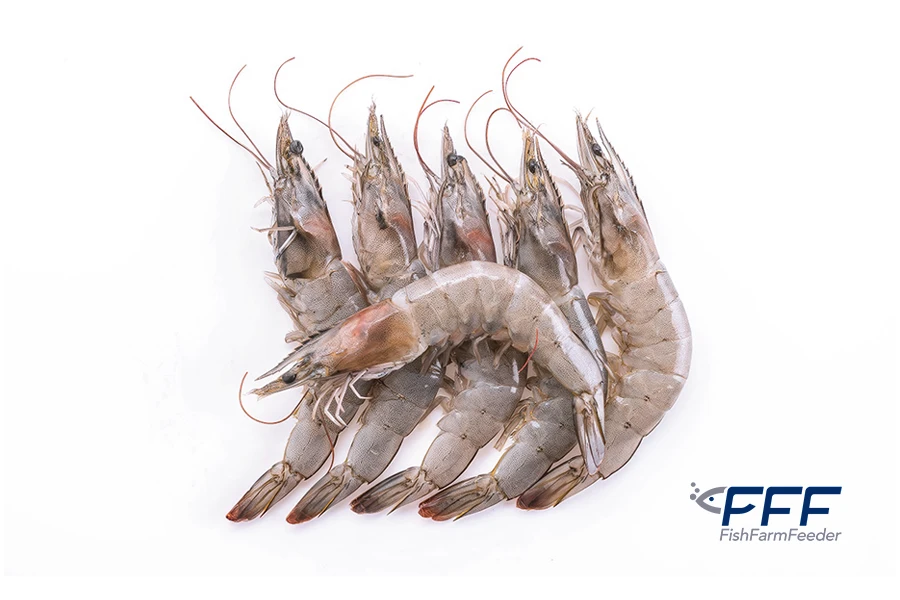
Feeding solutions for shrimp farming, RAS, intensive and semi-intensive ponds, hatcheries and production laboratories.
Feeding is one of the most important factors in the efficiency of a shrimp farm. Accurate, automated feeding adapted to the farming system helps improve feed management, reduce waste and optimize animal growth.
At Fish Farm Feeder, we offer different automatic feeding technologies for shrimp, adapted to each production system and to the different stages of the farming cycle.
Which feeding system does your shrimp farm need?
RAS
300–600 shrimp/m²
Centralized feeding system
Frequent and precise feeding 24 hours a day.
PONDS
30–300 shrimp/m²
Individual automatic feeders
Scheduled feeding or acoustic hydrophone-controlled feeding.
LABORATORIES
For hatcheries and laboratories
Live or dry feed
Feeds from 50 microns and liquid products.
Shrimp feeding systems for RAS
RAS (Recirculating Aquaculture Systems) allow high stocking densities and require particularly precise feed management.
For super-intensive systems, with densities that can reach approximately 300–600 shrimp/m², we recommend using centralized shrimp feeding systems.
These systems can distribute small feed doses at high frequency, with intervals of 30 minutes or less, 24 hours a day.
The amount of feed can be adjusted according to biomass and the shrimp growth, providing more accurate and controlled feeding.
MAIN ADVANTAGES:
24-hour automatic feeding.
Precise dosing of small feed quantities.
High feeding frequency.
Uniform feed distribution.
Reduced feed waste.
Greater control over feed consumption.
Feeding adapted to biomass.
Optimized growth and feed consumtion.
Shrimp feeding systems for hatcheries
During the early stages of production, small-sized feeds are used, typically between 0.3 and 0.8 mm.
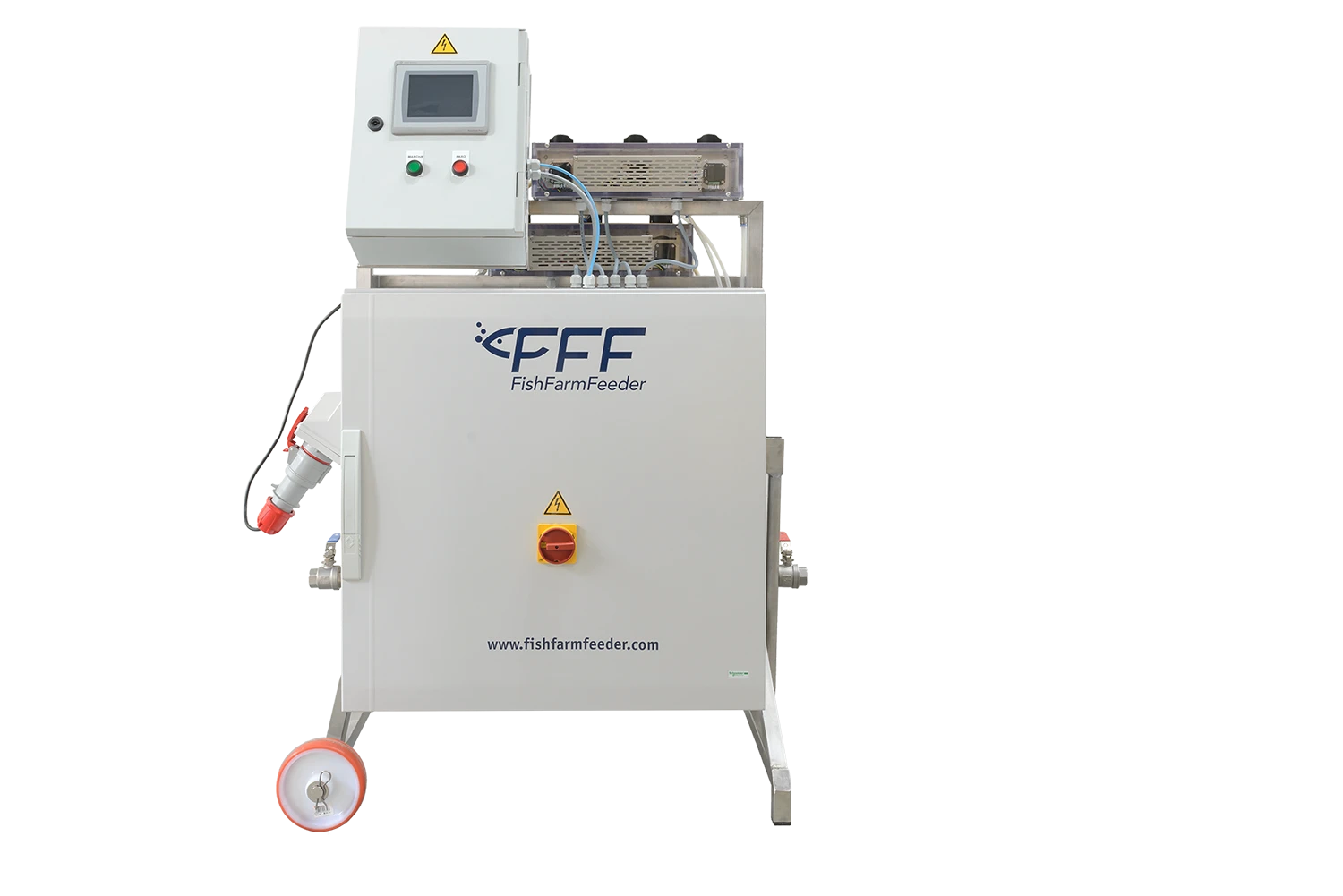
For this growth stage, Fish Farm Feeder offers centralized feeding systems specifically designed to handle small feed particle sizes.
MFH1020
Centralized feeding system for small-sized feed.
Shrimp feeding systems for grow-out
During the grow-out stages, larger feed particles are typically used, approximately between 1 and 3 mm.
Centralized feeding systems allow programming different feeding doses so the feed is distributed in a controlled manner within tanks.
FFF4140
Automatic feeding system for shrimp grow-out stage.
Automatic shrimp feeding systems for ponds
Intensive and semi-intensive shrimp farming in earthen ponds has different requirements from RAS production systems.
Stocking densities can range approximately from 30 to 300 shrimp/m², while pond sizes can range from approximately 0.2 to 1 hectare in intensive systems and from 1 to 10 hectares in semi-intensive systems.
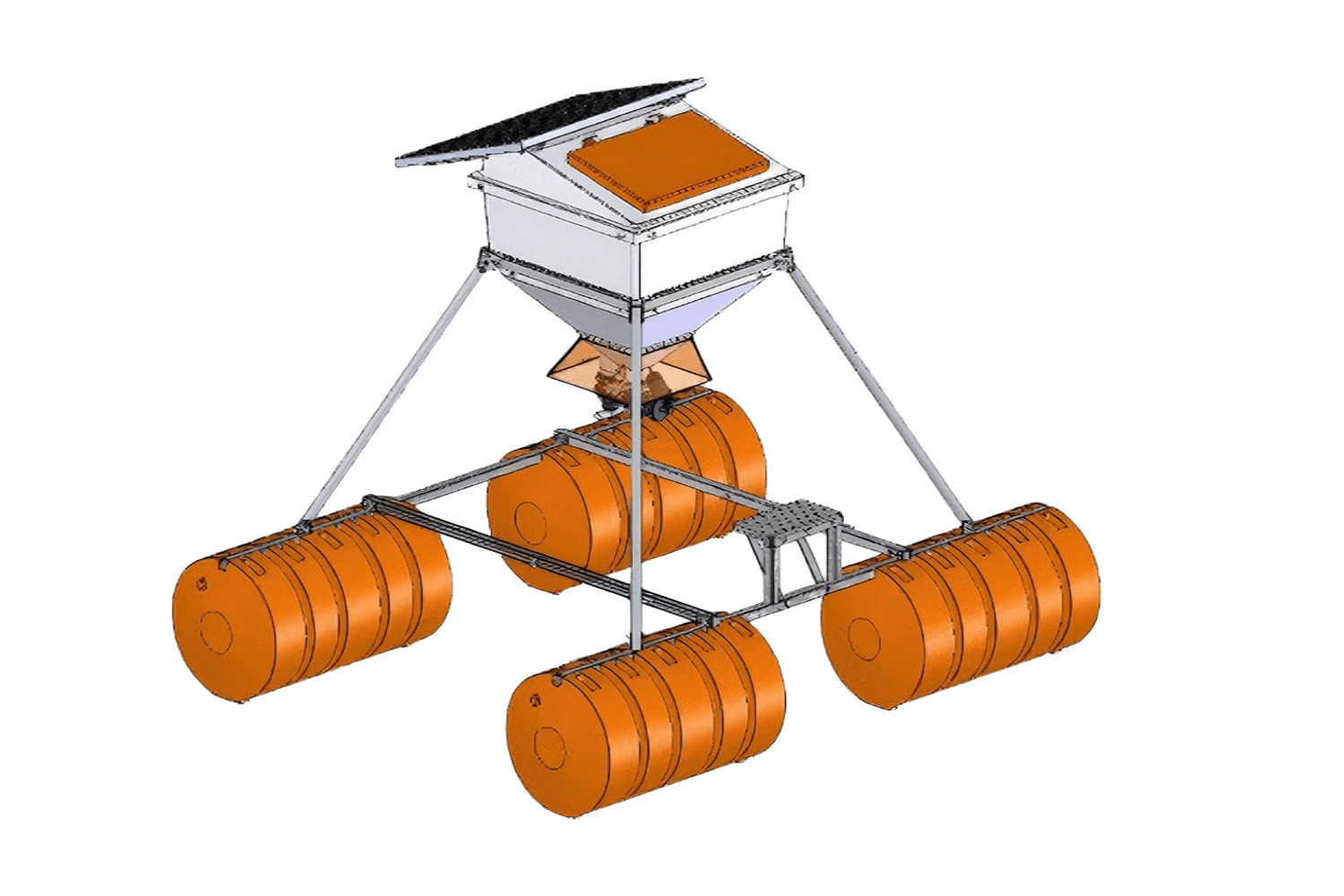
For these facilities, we recommend using individual automatic shrimp feeders.
These feeders can operate using:
SCHEDULED FEEDING
The farmer sets the feeding times and quantities according to the production program.
HYDROPHONE-CONTROLLED FEEDING
The hydrophone detects the acoustic activity associated with shrimp feeding and allows feed delivery to be adjusted according to demand.
Advantages of demand-based feeding
- Feed is supplied when shrimp are actively eating.
- Feed waste is reduced.
- Feed consumption can be better controlled.
- Feeding can be adapted to shrimp behavior.
- Feeding efficiency can be optimized.
Shrimp feeding systems for laboratories
Feeding requirements in shrimp hatcheries and laboratories are particularly demanding.
Shrimp may receive microdiets, powder, meal, Artemia, probiotics and other liquid feeds. This requires feeding systems capable of handling very small quantities and different types of feed.
Fish Farm Feeder offers specific solutions for these needs.
Feeding with live feed and liquid products
Our systems can be used with Artemia, probiotics and other liquid products, providing automated and controlled dosing.
LFH042000
Feeding system with refrigerated tank.
LFH062000
Feeding system using the customer’s own tank.
Feeding with microdiets and dry feed
Shrimp laboratories commonly work with powders and very small-sized microdiets.
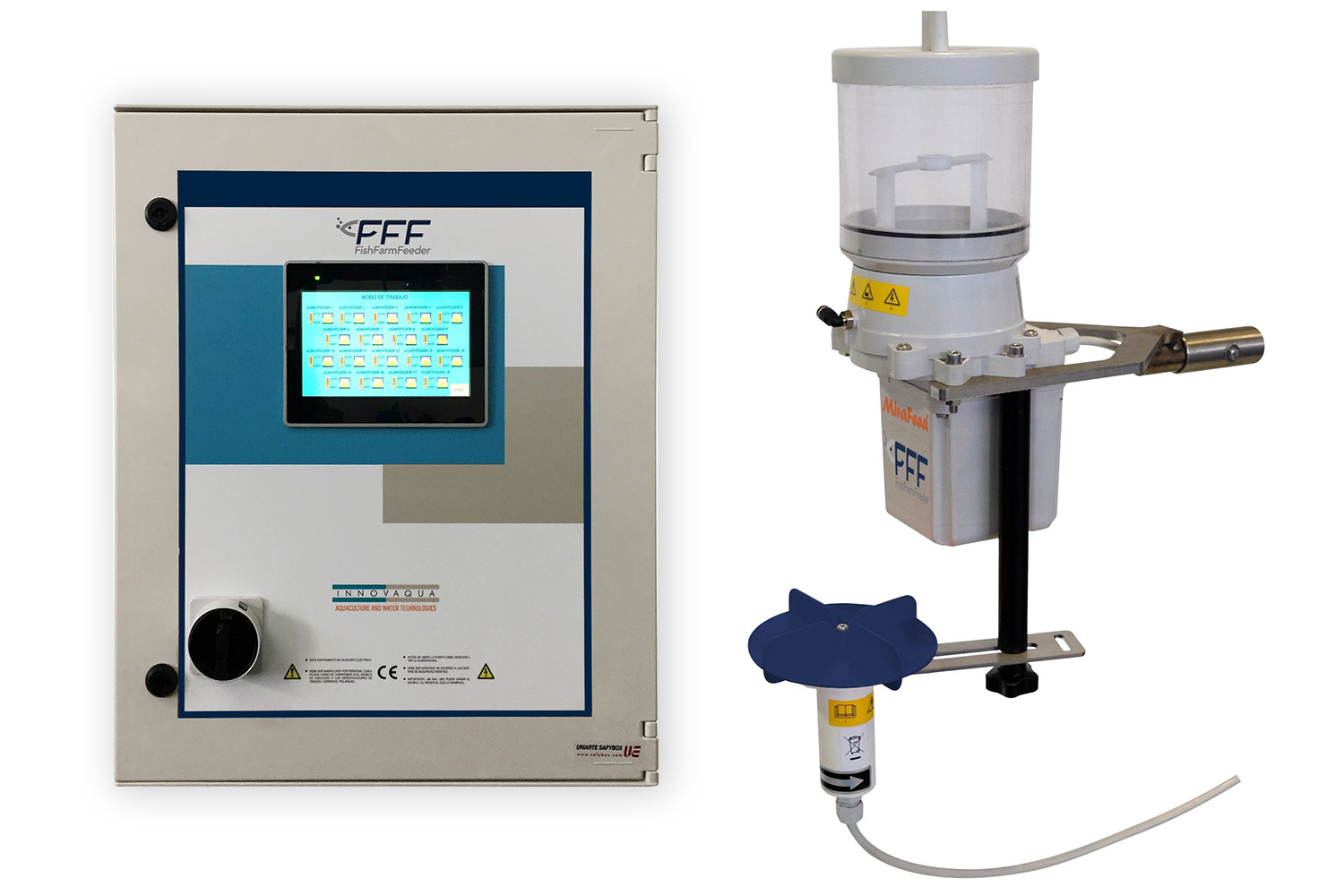
Fish Farm Feeder offers systems capable of handling feeds from 50 microns, making it possible to automate dosing even in applications requiring a high level of precision.
HFM010100
Feeding system for microdiets and small-sized dry feed.
Automate feeding in your shrimp farm
From high-frequency centralized feeding systems for RAS to individual automatic feeders for ponds and precision feeding equipment for laboratories, Fish Farm Feeder provides solutions adapted to the different requirements of shrimp farming.
Share with us information about your facility, farming system and feed type. Our team can help you select the most suitable automatic shrimp feeding solution for your production.